How 1930s Photographers Framed Casino Glamour and High Society
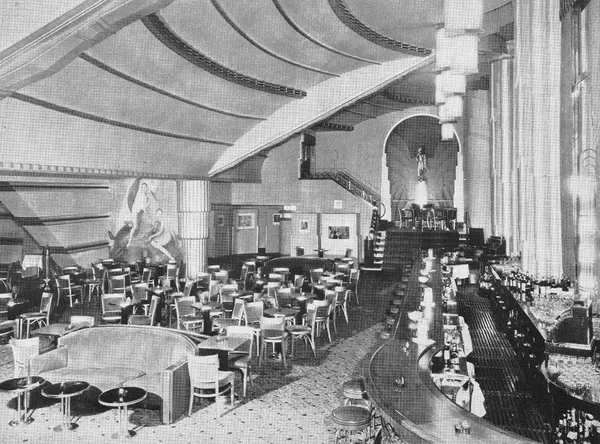
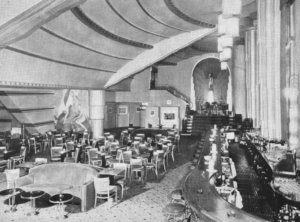
In the midst of global economic turmoil, 1930s photographers turned their lenses towards the insulated worlds of Monte Carlo, Baden-Baden, and London’s exclusive clubs, revealing a stark contrast between the opulence within and the harsh reality beyond their doors. This selective focus, captured in the historical photography of 1929-1935, crafted a powerful narrative of escapism and elegance that continues to define our vision of that era. Through their frames, we are granted access to a rarefied sphere where high society played, oblivious or indifferent to the wider world’s struggles.
The Lure of Light and Shadow: Photographic Techniques of the Era
Capturing the elusive atmosphere of 1930s casinos demanded both technical innovation and artistic ingenuity. Photographers moved away from bulky, tripod-bound equipment to embrace new, agile cameras that could seize candid moments in the dim, atmospheric lighting of gaming salons. Their work from this period is a masterclass in using available light and shadow to convey mood, drama, and intimacy.
The Tools of the Trade: From Leica to Rolleiflex
The decade saw a revolution in photographic gear, with two cameras becoming particularly synonymous with documentary work. The introduction of the Leica I, with its compact 35mm format, was transformative. Its quiet shutter and portability allowed photographers to blend into the background, capturing unguarded expressions at the roulette table. Alongside it, the medium-format Rolleiflex offered superior image quality and a waist-level viewfinder, enabling discreet composition without the photographer’s face being obscured. These tools were essential for the unobtrusive documentation of high-society rituals.
Mastering Low Light: Available Light and Fast Film
Artificial lighting was often forbidden or impractical in these elegant settings. Photographers relied on fast film stocks, such as Kodak’s Super-XX, which offered improved sensitivity. This allowed them to work with the available light from chandeliers, sconces, and table lamps, often resulting in images rich with contrast and deep shadows. The grainy texture that sometimes resulted from pushing these films only added to the atmospheric, evocative quality of the scenes, immortalising the glow of a cigarette, the glint of jewellery, or the intense focus on a gambler’s face.
Monte Carlo: The Undisputed Star of the Casino World
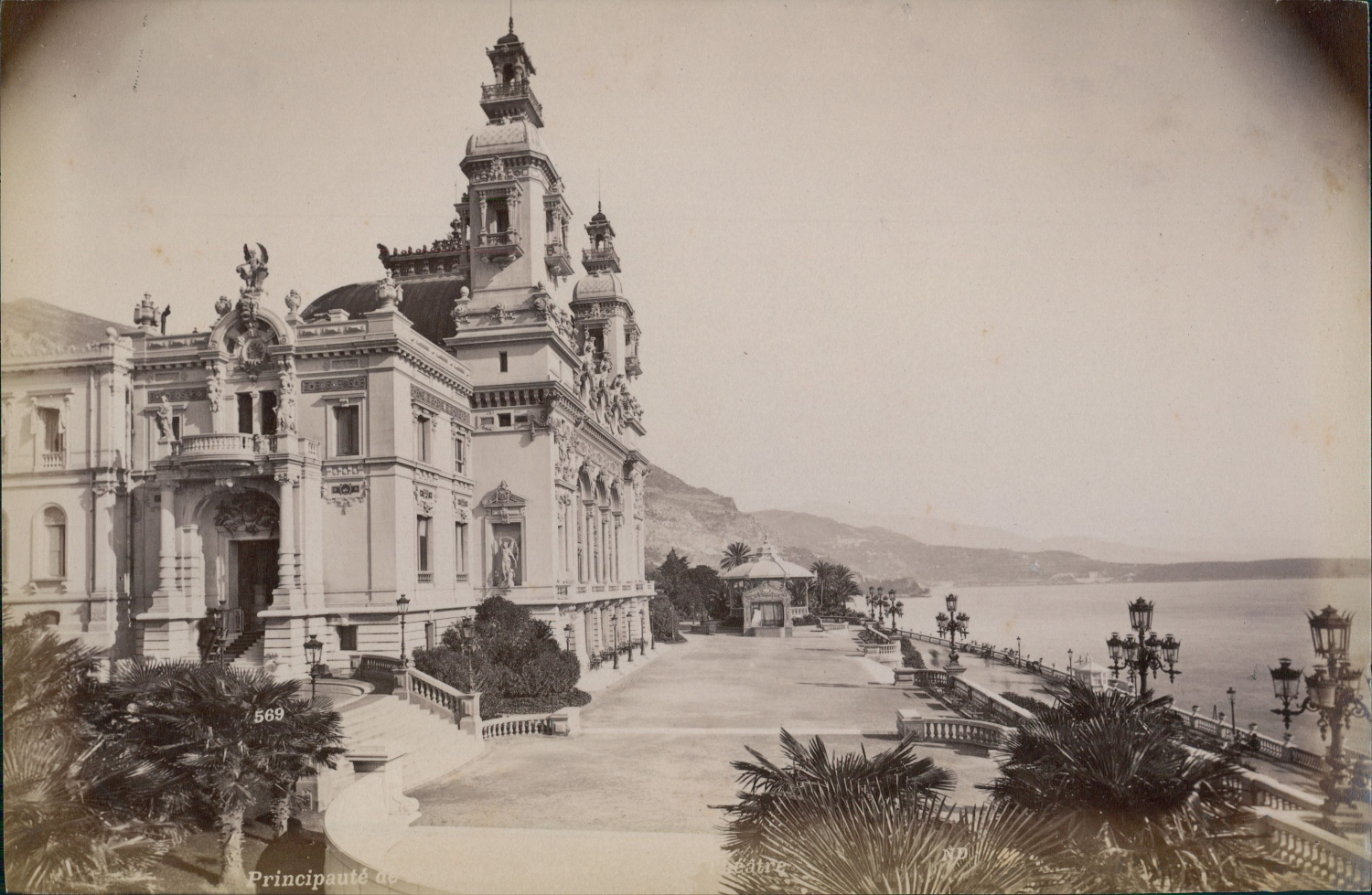
No location captivated the lens more than the Casino de Monte-Carlo. During the early 1930s, it stood as a beacon of fantasy and fortune, its reputation untarnished by the Great Depression. Photographers, including those contributing to renowned archives like the Keystone View Company, flocked to this principality to document its legendary status, making it the central subject of European casino archives.
Architectural Grandeur as a Backdrop
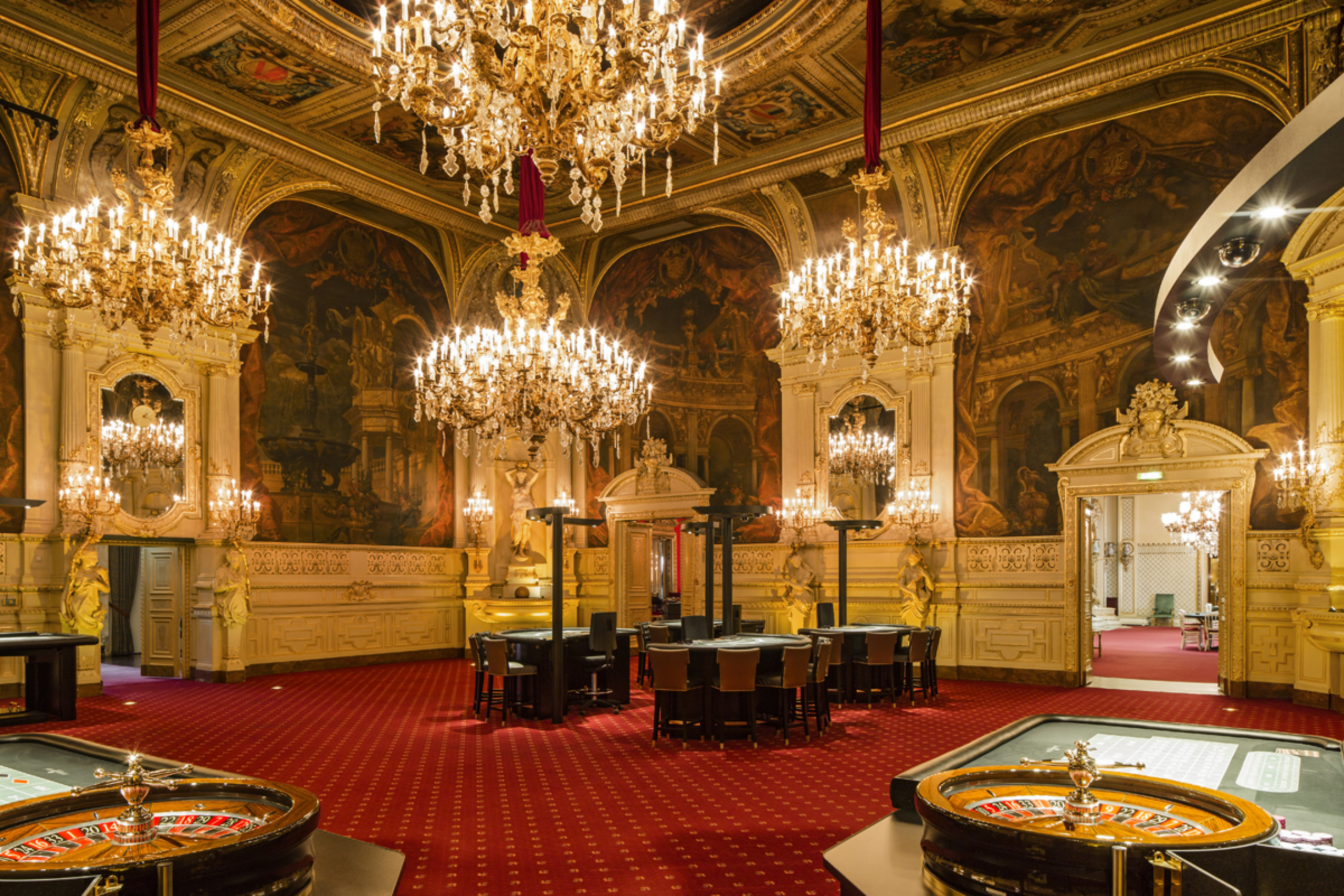
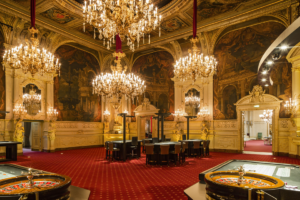
The casino itself was often the first subject. Its Belle Époque facade, opulent gaming rooms, and ornate frescoes provided a ready-made stage of breathtaking scale. Photographs emphasised its palatial dimensions, using wide angles to encompass the sweeping staircases and vaulted ceilings, framing human subjects as smaller elements within a grand, theatrical design. This technique reinforced the idea of the casino as an immortal, imposing temple of chance.
Candid Portraits of the International Set
Beyond the architecture, the true allure was the clientele. The monte carlo casino history is populated by a jet-setting mix of exiled royalty, wealthy industrialists, literary figures, and celebrities. Photographers sought candid shots of this international set: a Russian grand duke placing a bet, an American heiress laughing at the chemin de fer table, or a famous actress arriving by luxury automobile. These images sold a dream of cosmopolitan, carefree luxury to the public.
Beyond Monte Carlo: Baden-Baden and the Continental Circuit
While Monte Carlo shone brightest, the continental casino circuit offered other nuanced stages for the camera. The spa town of Baden-Baden, with its famed Kurhaus, presented a different flavour of elegance, one intertwined with health and refinement rather than outright Riviera glamour. The vintage gambling photos from here tell a story of subdued, therapeutic luxury.
Baden-Baden’s Kurhaus: A Different Kind of Elegance
The Kurhaus in Baden-Baden is a masterpiece of neoclassical architecture, and photographers of the era highlighted its harmonious, balanced proportions. The images often show a more formal, restrained atmosphere compared to Monte Carlo. The focus was on the integration of leisure activities: guests captured promenading in the surrounding gardens or taking the waters, with gambling presented as just one part of a cultured, health-conscious retreat. This context is crucial in understanding the full scope of baden baden historical photos.
The German and Austrian Aristocratic Scene
The clientele at Baden-Baden was distinctly central European, drawing heavily from the German and Austrian aristocratic and industrial elite. Portraits from this scene often show a more reserved, stern elegance—men in meticulous tailoring, women in sophisticated but less flamboyant gowns. The photographic narrative here is one of established wealth and tradition, a world where social standing was as much on display as any stack of chips.
The British Connection: London’s High-Stakes Scene
Across the Channel, London’s gambling scene operated with characteristic discretion. Eschewing the palatial public casinos of the continent, high-stakes play was confined to exclusive members-only clubs in Mayfair and St. James’s. Documenting this world required different access and a keen eye for the nuances of British social hierarchy.
Crockford’s and the Discreet Charm of Mayfair
Established in the 19th century, Crockford’s Club in London was the epitome of this discreet environment. Photographs from inside were rare, but exterior shots and images of members arriving became staples. The visual story was one of understated privilege: black-tie gentlemen alighting from Rolls-Royces outside an elegant but unassuming townhouse facade. The glamour was implied, not shouted, reflecting the British upper class’s preference for privacy.
The British Press and Society Pages
Access to this closed world was often mediated through the British press. Society photographers working for publications like The Tatler or The Bystander specialised in capturing aristocracy and celebrities at charity balls or premieres, with occasional glimpses into clubland. These British society photographer society pages curated an image of effortless elitism, where a duke might be photographed at a gaming table as part of a wider narrative of his social season, further embedding gambling into the fabric of high-society life.
Glamour as a Narrative: More Than Just Gambling
The photographers of the 1930s were not merely recording games of chance; they were constructing a cohesive narrative of glamour. Every element within the frame was a carefully chosen prop in a theatre of aspiration, transforming a gambling hall into a symbol of a sophisticated, desirable lifestyle.
Fashion and Finery: Dressing the Part
Evening wear was non-negotiable, and photographers highlighted this sartorial code. Images meticulously detail the drape of a silk evening gown, the sharp line of a tailcoat, and the sparkle of diamond cufflinks. This emphasis on fashion served a dual purpose: it underlined the exclusivity of the setting and provided a captivating visual record of 1930s haute couture and formalwear in its most natural habitat.
The Theatre of Social Ritual
The act of gambling was often secondary to the social rituals surrounding it. Photographers composed shots that emphasised performance: the elegant reach for a chip, the studied nonchalance of a loss, the celebratory pop of a champagne cork. Key visual motifs included:
- The sleek contours of luxury motorcars parked outside.
- Glasses of champagne or cocktails resting on velvety rails.
- Intimate, conspiratorial conversations in plush alcoves.
These elements combined to create a powerful iconography of wealth and leisure, selling a dream that extended far beyond the spin of a wheel.
The Editorial Eye: Curating History from the Archives
Today, when we examine these images in collections like the Keystone View Company archives, we must engage in critical analysis. Our editorial process involves not just selecting the most striking images but interrogating their context and purpose to understand the historical photography 1929-1935 as a constructed narrative.
Selecting the Iconic Shot
Our selection prioritises images that best encapsulate the era’s aesthetic and social themes. We look for technical mastery, compelling composition, and historical significance—a famous face, a defining location, or a perfect embodiment of the ‘glamour’ narrative. These iconic shots form the cornerstone of understanding how the era wished to see itself.
Reading Between the Frames: What’s Missing?
The most important archival work often involves noting the absences. These photographs systematically exclude:
- The vast army of staff—croupiers, waiters, cleaners—who facilitated the glamour.
- The reality of financial ruin; losses were never depicted, only poised anticipation or muted reaction.
- The broader social context of economic depression and rising political tensions outside the casino walls.
By acknowledging this curated exclusion, we understand that these photographs were editorial products, designed to craft and sustain a myth of insulated, perpetual elegance.
The legacy of 1930s casino photography endures precisely because it succeeded in its narrative goal. These are not mere historical records but carefully composed fantasies of escapism. They continue to shape our romantic vision of that era, reminding us that the camera always lies in the most beautiful way, framing not just light and shadow, but desire itself.